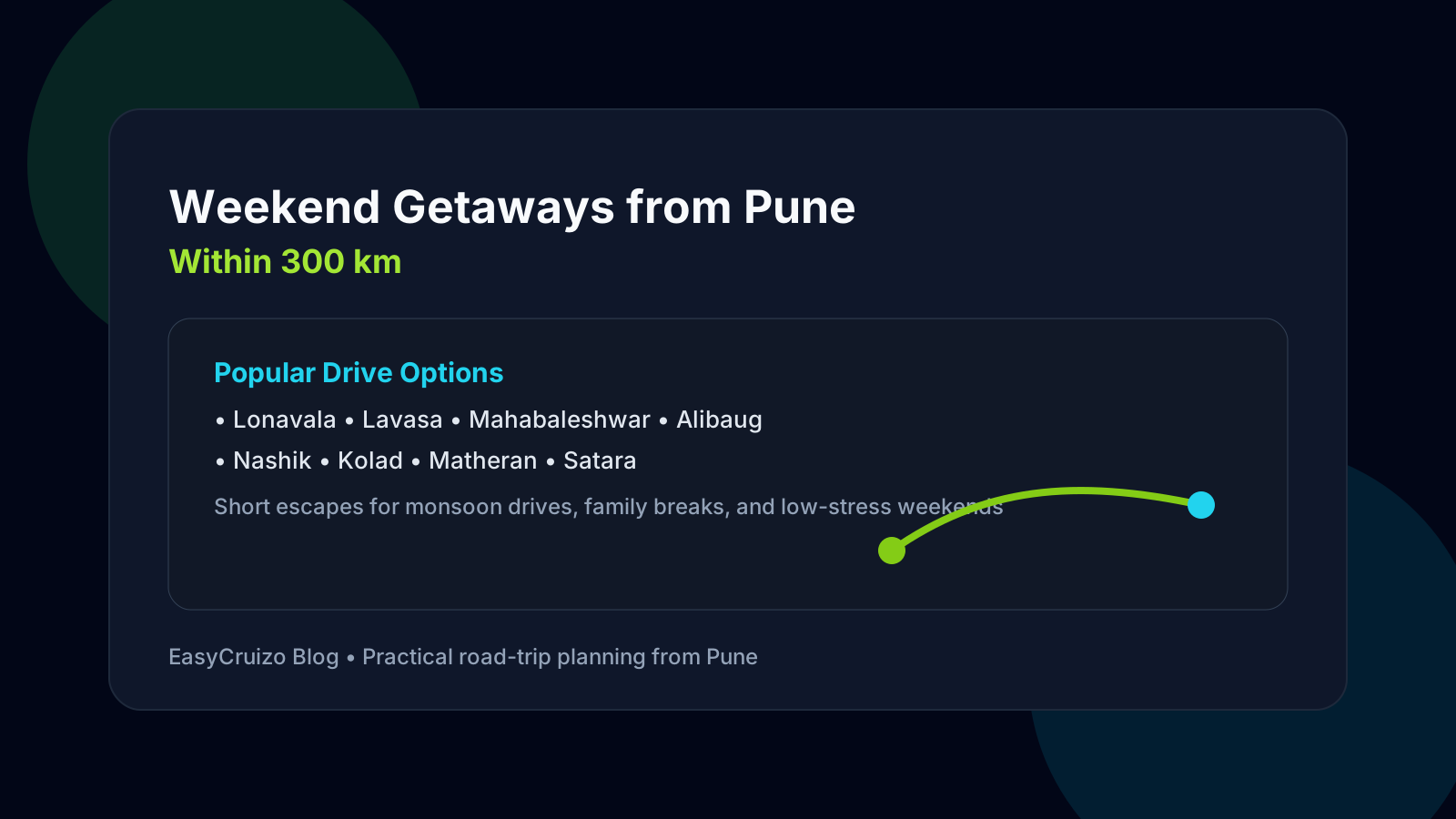
Weekend Getaways from Pune Within 300 km
Pune weekend travel works best when destination type, weather, and route effort are balanced intentionally becomes significantly easier when people plan movement, timing, and communication as one connected system instead of separate tasks. Most avoidable travel frustration starts when scheduling assumptions are made without accounting for real road behavior, transition delays, and human energy. A structured approach helps Pune-based travelers planning short road escapes make better decisions before the day gets busy, which is where reliability is actually won.
This guide is designed as a practical playbook rather than generic advice. Each section focuses on actions that can be repeated across weekdays, event periods, and high-pressure schedules. The goal is simple: reduce avoidable uncertainty, preserve emotional bandwidth, and improve the quality of outcomes at destination points. When planning improves, both travel experience and end results improve together.
Table of Contents
- 1. Start With Trip Intent Before Destination
- 2. Destination Buckets Within 300 km
- 3. Monsoon and Seasonal Readiness
- 4. Role Clarity for Group Road Trips
- 5. Accommodation and Stop Sequencing
- 6. Designing a Low-Fatigue Return Day
- 7. Managing Cost Without Experience Drop
- 8. Building a Repeatable Weekend System
1. Start With Trip Intent Before Destination
Mood-based planning reduces mismatch between expectation and reality is most effective when translated into repeatable behavior instead of one-time effort. In practical terms, this means defining clear expectations before movement begins, keeping decisions simple under pressure, and avoiding over-optimization in live situations. People who plan this way usually reach destinations with better focus because they are not constantly reacting to surprises. For Pune-based travelers planning short road escapes, this consistency improves trust, predictability, and confidence over time.
A useful method is to treat this part of the journey as a mini-process with inputs, checkpoints, and fallback options. Inputs include timing assumptions, route awareness, and role clarity. Checkpoints include update windows, transition buffers, and confirmation moments. Fallback options include alternate routes, contact protocols, and plan-B sequences. This process view makes weekend getaways from pune within 300 km more reliable because performance does not depend entirely on luck or last-minute improvisation.
Execution quality improves when teams or individuals review outcomes after each cycle and refine the next plan with evidence. Ask what caused delay, what reduced stress, what created avoidable friction, and what can be standardized. Even small improvements compound across repeated travel weeks. By tightening this loop, Pune-based travelers planning short road escapes can move from reactive movement patterns to a calmer system that supports better decisions, better communication, and better destination performance.
2. Destination Buckets Within 300 km
Categorizing routes by style helps choose quickly and confidently is most effective when translated into repeatable behavior instead of one-time effort. In practical terms, this means defining clear expectations before movement begins, keeping decisions simple under pressure, and avoiding over-optimization in live situations. People who plan this way usually reach destinations with better focus because they are not constantly reacting to surprises. For Pune-based travelers planning short road escapes, this consistency improves trust, predictability, and confidence over time.
A useful method is to treat this part of the journey as a mini-process with inputs, checkpoints, and fallback options. Inputs include timing assumptions, route awareness, and role clarity. Checkpoints include update windows, transition buffers, and confirmation moments. Fallback options include alternate routes, contact protocols, and plan-B sequences. This process view makes weekend getaways from pune within 300 km more reliable because performance does not depend entirely on luck or last-minute improvisation.
Execution quality improves when teams or individuals review outcomes after each cycle and refine the next plan with evidence. Ask what caused delay, what reduced stress, what created avoidable friction, and what can be standardized. Even small improvements compound across repeated travel weeks. By tightening this loop, Pune-based travelers planning short road escapes can move from reactive movement patterns to a calmer system that supports better decisions, better communication, and better destination performance.
3. Monsoon and Seasonal Readiness
Weather-aware planning reduces risk and improves on-road confidence is most effective when translated into repeatable behavior instead of one-time effort. In practical terms, this means defining clear expectations before movement begins, keeping decisions simple under pressure, and avoiding over-optimization in live situations. People who plan this way usually reach destinations with better focus because they are not constantly reacting to surprises. For Pune-based travelers planning short road escapes, this consistency improves trust, predictability, and confidence over time.
A useful method is to treat this part of the journey as a mini-process with inputs, checkpoints, and fallback options. Inputs include timing assumptions, route awareness, and role clarity. Checkpoints include update windows, transition buffers, and confirmation moments. Fallback options include alternate routes, contact protocols, and plan-B sequences. This process view makes weekend getaways from pune within 300 km more reliable because performance does not depend entirely on luck or last-minute improvisation.
Execution quality improves when teams or individuals review outcomes after each cycle and refine the next plan with evidence. Ask what caused delay, what reduced stress, what created avoidable friction, and what can be standardized. Even small improvements compound across repeated travel weeks. By tightening this loop, Pune-based travelers planning short road escapes can move from reactive movement patterns to a calmer system that supports better decisions, better communication, and better destination performance.
4. Role Clarity for Group Road Trips
Clear responsibilities improve timing and reduce coordination stress is most effective when translated into repeatable behavior instead of one-time effort. In practical terms, this means defining clear expectations before movement begins, keeping decisions simple under pressure, and avoiding over-optimization in live situations. People who plan this way usually reach destinations with better focus because they are not constantly reacting to surprises. For Pune-based travelers planning short road escapes, this consistency improves trust, predictability, and confidence over time.
A useful method is to treat this part of the journey as a mini-process with inputs, checkpoints, and fallback options. Inputs include timing assumptions, route awareness, and role clarity. Checkpoints include update windows, transition buffers, and confirmation moments. Fallback options include alternate routes, contact protocols, and plan-B sequences. This process view makes weekend getaways from pune within 300 km more reliable because performance does not depend entirely on luck or last-minute improvisation.
Execution quality improves when teams or individuals review outcomes after each cycle and refine the next plan with evidence. Ask what caused delay, what reduced stress, what created avoidable friction, and what can be standardized. Even small improvements compound across repeated travel weeks. By tightening this loop, Pune-based travelers planning short road escapes can move from reactive movement patterns to a calmer system that supports better decisions, better communication, and better destination performance.
5. Accommodation and Stop Sequencing
Simple sequencing avoids rushed weekends with poor recovery value is most effective when translated into repeatable behavior instead of one-time effort. In practical terms, this means defining clear expectations before movement begins, keeping decisions simple under pressure, and avoiding over-optimization in live situations. People who plan this way usually reach destinations with better focus because they are not constantly reacting to surprises. For Pune-based travelers planning short road escapes, this consistency improves trust, predictability, and confidence over time.
A useful method is to treat this part of the journey as a mini-process with inputs, checkpoints, and fallback options. Inputs include timing assumptions, route awareness, and role clarity. Checkpoints include update windows, transition buffers, and confirmation moments. Fallback options include alternate routes, contact protocols, and plan-B sequences. This process view makes weekend getaways from pune within 300 km more reliable because performance does not depend entirely on luck or last-minute improvisation.
Execution quality improves when teams or individuals review outcomes after each cycle and refine the next plan with evidence. Ask what caused delay, what reduced stress, what created avoidable friction, and what can be standardized. Even small improvements compound across repeated travel weeks. By tightening this loop, Pune-based travelers planning short road escapes can move from reactive movement patterns to a calmer system that supports better decisions, better communication, and better destination performance.
6. Designing a Low-Fatigue Return Day
Return planning is often the biggest determinant of Monday readiness is most effective when translated into repeatable behavior instead of one-time effort. In practical terms, this means defining clear expectations before movement begins, keeping decisions simple under pressure, and avoiding over-optimization in live situations. People who plan this way usually reach destinations with better focus because they are not constantly reacting to surprises. For Pune-based travelers planning short road escapes, this consistency improves trust, predictability, and confidence over time.
A useful method is to treat this part of the journey as a mini-process with inputs, checkpoints, and fallback options. Inputs include timing assumptions, route awareness, and role clarity. Checkpoints include update windows, transition buffers, and confirmation moments. Fallback options include alternate routes, contact protocols, and plan-B sequences. This process view makes weekend getaways from pune within 300 km more reliable because performance does not depend entirely on luck or last-minute improvisation.
Execution quality improves when teams or individuals review outcomes after each cycle and refine the next plan with evidence. Ask what caused delay, what reduced stress, what created avoidable friction, and what can be standardized. Even small improvements compound across repeated travel weeks. By tightening this loop, Pune-based travelers planning short road escapes can move from reactive movement patterns to a calmer system that supports better decisions, better communication, and better destination performance.
7. Managing Cost Without Experience Drop
Smart allocation can improve trip quality while keeping spend practical is most effective when translated into repeatable behavior instead of one-time effort. In practical terms, this means defining clear expectations before movement begins, keeping decisions simple under pressure, and avoiding over-optimization in live situations. People who plan this way usually reach destinations with better focus because they are not constantly reacting to surprises. For Pune-based travelers planning short road escapes, this consistency improves trust, predictability, and confidence over time.
A useful method is to treat this part of the journey as a mini-process with inputs, checkpoints, and fallback options. Inputs include timing assumptions, route awareness, and role clarity. Checkpoints include update windows, transition buffers, and confirmation moments. Fallback options include alternate routes, contact protocols, and plan-B sequences. This process view makes weekend getaways from pune within 300 km more reliable because performance does not depend entirely on luck or last-minute improvisation.
Execution quality improves when teams or individuals review outcomes after each cycle and refine the next plan with evidence. Ask what caused delay, what reduced stress, what created avoidable friction, and what can be standardized. Even small improvements compound across repeated travel weeks. By tightening this loop, Pune-based travelers planning short road escapes can move from reactive movement patterns to a calmer system that supports better decisions, better communication, and better destination performance.
8. Building a Repeatable Weekend System
Consistent planning habits make short escapes sustainable year-round is most effective when translated into repeatable behavior instead of one-time effort. In practical terms, this means defining clear expectations before movement begins, keeping decisions simple under pressure, and avoiding over-optimization in live situations. People who plan this way usually reach destinations with better focus because they are not constantly reacting to surprises. For Pune-based travelers planning short road escapes, this consistency improves trust, predictability, and confidence over time.
A useful method is to treat this part of the journey as a mini-process with inputs, checkpoints, and fallback options. Inputs include timing assumptions, route awareness, and role clarity. Checkpoints include update windows, transition buffers, and confirmation moments. Fallback options include alternate routes, contact protocols, and plan-B sequences. This process view makes weekend getaways from pune within 300 km more reliable because performance does not depend entirely on luck or last-minute improvisation.
Execution quality improves when teams or individuals review outcomes after each cycle and refine the next plan with evidence. Ask what caused delay, what reduced stress, what created avoidable friction, and what can be standardized. Even small improvements compound across repeated travel weeks. By tightening this loop, Pune-based travelers planning short road escapes can move from reactive movement patterns to a calmer system that supports better decisions, better communication, and better destination performance.